

Why NNN Investors Prefer Colorado State: Higher Growth & Competitive Cap Rates Explained
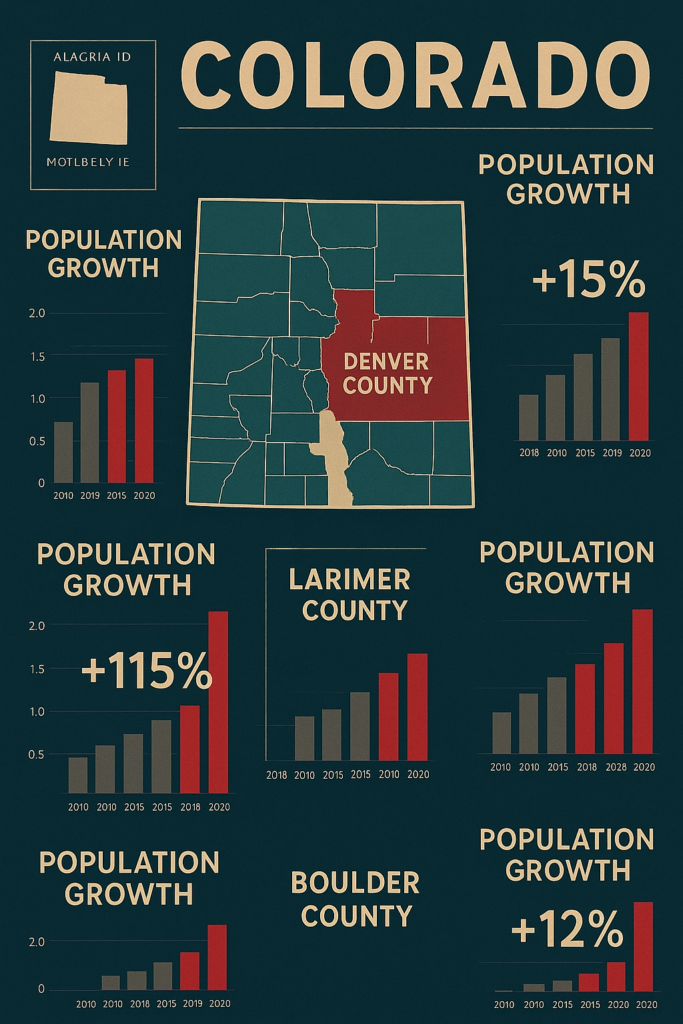
Future holding for NNN property investments in Colorado
Triple Net Lease (NNN) properties, where tenants are responsible for property taxes, insurance, and maintenance, continue to be a go-to investment option for those seeking passive income and long-term value. In Colorado, the outlook for NNN property investments remains strong, driven by a combination of economic vitality, demographic shifts, and attractive market fundamentals.
1. Economic and Population Growth
Colorado’s economy is among the most dynamic in the U.S., with key sectors including aerospace, biotech, energy, and technology. Cities like Denver, Colorado Springs, and Fort Collins have seen consistent population growth, attracting businesses and boosting demand for commercial real estate. This growth translates into greater stability and appreciation potential for NNN investors.
2. Stability and Demand for NNN Properties
NNN lease agreements offer predictable, long-term cash flow, which is particularly valuable in Colorado’s competitive real estate environment. With minimal landlord responsibilities and steady tenant payments, these properties continue to attract investors seeking low-risk opportunities—even amid economic uncertainty. The state’s pro-business climate and educated workforce contribute to tenant stability and lease longevity.
3. Market Trends and Cap Rates
Cap rates for NNN properties in Colorado have remained relatively compressed, especially in prime markets like Denver, due to high demand and limited inventory. However, in secondary and tertiary markets (such as Pueblo and Greeley), cap rates are slightly higher, offering better returns for investors willing to look beyond major metros. Rising interest rates have also modestly impacted pricing, creating more negotiating room for buyers in 2025.
4. Financing Considerations for NNN Investors
Similar to other states, investing in NNN properties in Colorado often requires a net worth of $1 million or an annual income over $200,000. Investors should be prepared to provide 30% to 40% in down payment, with lenders scrutinizing tenant creditworthiness and lease duration. Favorable financing terms are often available for properties leased to national tenants like Walgreens, Dollar General, or FedEx.
5. Local Market Opportunities
Colorado presents diverse opportunities across urban, suburban, and rural areas. In Denver, high-traffic retail corridors remain popular, while Colorado Springs and Fort Collins offer growing demand for single-tenant medical and service-based NNN properties. For instance, a recently listed single-tenant retail building in Colorado Springs with a corporate-backed lease and scheduled rent escalations represents a strong 1031 exchange candidate for investors seeking stable, long-term income.
Triple-net (NNN) investors are increasingly turning to Colorado as a prime location for net lease properties, thanks to its economic strength, demographic growth, and resilient commercial real estate markets. Here’s why NNN brokers and investors see Colorado as a lucrative and stable investment destination:
1. Competitive Cap Rates with Upside Potential
While Colorado’s cap rates are generally lower than the national average—typically ranging between 5% to 6.5% in core markets like Denver or Boulder—they still offer better long-term upside due to tenant strength and appreciation potential. In secondary markets such as Pueblo, Greeley, or Grand Junction, cap rates may approach 6.5%–7%, attracting NNN investors seeking both stability and stronger returns.
2. Strong Property Appreciation & Tenant Credit Quality
Colorado’s relatively higher real estate appreciation—particularly in metro areas—balances slightly compressed cap rates. Net lease properties in cities like Denver often attract investment-grade tenants such as Amazon, Starbucks, and Walgreens, giving investors peace of mind regarding payment reliability and asset value retention.
3. Rapid Population Growth & Economic Expansion
Colorado’s population has grown rapidly over the last decade, driven by job growth, quality of life, and educational institutions. Cities like Colorado Springs, Fort Collins, and Denver are attracting tech firms, healthcare providers, and logistics companies. This continued growth fuels demand for commercial real estate, supporting a strong outlook for NNN property investments.
4. High Demand for Essential Retail & QSR Tenants
Essential retail and QSR tenants remain a core focus for NNN investors in Colorado. Brands like 7-Eleven, Dollar Tree, CVS, Starbucks, Chick-fil-A, and Taco Bell maintain a strong presence and customer base in both urban and rural areas. These properties often feature long-term leases with built-in escalations, making them attractive to passive income investors.
5. Favorable Tax Structure for Passive Investors
While Colorado does levy a state income tax of 4.4%, its transparent tax system and incentives for real estate investors, such as depreciation and 1031 exchanges, still make it attractive for those looking to maximize returns. Out-of-state investors can also benefit from tax deferral strategies and passive LLC structures, provided they work with a qualified CPA familiar with Colorado regulations.
6. Industrial Growth & Infrastructure Development
Colorado is experiencing a booming industrial sector, with significant investments in logistics, e-commerce, warehousing, and advanced manufacturing. The I-25 and I-70 corridors have become strategic arteries for distribution and shipping, driving demand for single-tenant industrial NNN properties. Additionally, state investments in transportation and public infrastructure continue to enhance the commercial appeal of less saturated markets.
Income Taxes
Colorado’s Tax Landscape for NNN Investors: What to Know Before You Invest
Colorado remains a desirable destination for NNN property investments thanks to its growing economy and stable commercial real estate market. While it doesn’t offer the same ultra-low-tax advantages as some Southern states like Alabama, it still provides a balanced and investor-friendly tax environment, especially for those seeking long-term returns and capital preservation. Here’s how Colorado stacks up for NNN investors:
1. Flat State Income Tax on Rental and Passive Income
Colorado levies a flat state income tax rate of 4.4% (as of 2024) on all types of individual income, including rental income from NNN properties, even if held through an LLC. While this is not tax-exempt like in some states, it’s still lower than states like California (13.3%) or New York (10.9%), making Colorado a reasonable choice for investors looking to avoid high income tax states.
2. Competitive Corporate Income Tax Rate
Colorado’s corporate income tax rate is also 4.4%, matching the personal income tax rate. This flat rate is relatively competitive compared to many other states and benefits NNN investors using corporation-based structures (such as C-corps or REITs) to hold their assets. It allows for easier planning and predictability when reinvesting profits into additional net lease properties.
3. No City-Level Income Taxes
Unlike some states where cities impose additional income taxes (e.g., New York City, San Francisco), Colorado does not have city-level income taxes. This adds a layer of simplicity for NNN investors owning properties in urban areas such as Denver, Boulder, or Colorado Springs.
4. No State-Level Estate or Inheritance Tax
Colorado does not impose an estate or inheritance tax, offering a significant advantage for multigenerational investors. Net lease property owners can pass down assets to heirs without worrying about additional state-level taxation, which is increasingly important for long-term estate planning.
5. Moderate Property Tax Rates
Colorado’s average effective property tax rate is approximately 0.55%, which is below the national average and far more attractive than high-tax states like New Jersey (2.2%) or Illinois (2.1%). This makes holding NNN properties in Colorado less costly over time, especially in suburban and rural areas where property taxes are even lower.
6. Capital Gains Tax Treated as Regular Income
Colorado does not have a separate capital gains tax—instead, capital gains are taxed as ordinary income at the flat 4.4% state rate. This is far more favorable than California’s 13.3% top rate and makes Colorado relatively attractive for investors planning a 1031 exchange or evaluating exit strategies for appreciated NNN properties.
Investing in triple net lease (NNN) properties in Colorado can be a strategic move, especially in areas experiencing significant population growth and economic development. NNN properties require tenants to handle property taxes, insurance, and maintenance, offering investors a more hands-off approach. Based on recent data, here are some of the top counties in Colorado to consider for NNN property investments:
1. Weld County (Greeley Area):
Population Growth: Between July 2023 and July 2024, Weld County’s population increased by 9,529 residents, marking a 2.6% growth—the highest among Colorado counties during this period.
Economic Development: Weld County has experienced substantial growth, with a 32.8% increase in population between 2013 and 2023, adding approximately 88,341 people.
Investment Potential: The county’s robust growth and economic development make it an attractive location for NNN investments, particularly in retail and industrial sectors.
2. Douglas County (Castle Rock, Highlands Ranch):
Population Growth: Douglas County saw an increase of 8,854 residents from July 2023 to July 2024, a 2.3% growth rate.
Economic Development: As part of the Denver–Aurora–Lakewood metropolitan area, Douglas County benefits from its proximity to major urban centers and has the highest median household income of any Colorado county.
Investment Potential: The county’s affluence and growth make it suitable for NNN investments in high-end retail and office spaces.
3. El Paso County (Colorado Springs):
Population Growth: El Paso County’s population grew by 5,838 individuals between July 2023 and July 2024, an increase of 0.8%.
Economic Development: Home to Colorado Springs, the county benefits from a diverse economy, including defense, technology, and tourism sectors.
Investment Potential: The area’s economic diversity and growth support opportunities for NNN investments in various commercial real estate sectors.
4. Larimer County (Fort Collins):
Population Growth: Larimer County’s population increased from 359,066 in 2020 to an estimated 370,771 in 2023.
Economic Development: The county is home to Colorado State University and has a strong presence in education, healthcare, and technology industries.
Investment Potential: The stable economy and growing population make Larimer County a promising area for NNN investments, especially in sectors serving the university and healthcare communities.
5. Adams County (Commerce City, Brighton):
Population Growth: Adams County experienced a population increase of 7,296 residents from July 2023 to July 2024, a 1.4% growth rate.
Economic Development: The county is actively promoting economic development through initiatives like the Enterprise Zone Program, encouraging business growth in economically distressed areas.
Investment Potential: With ongoing economic initiatives and population growth, Adams County presents opportunities for NNN investments in emerging commercial areas.
6. Broomfield County (City and County of Broomfield):
Population Growth: While specific growth figures from 2023 to 2024 are not provided, Broomfield has been recognized for its commitment to fostering economic growth.
Economic Development: Awarded the ‘Large Community of the Year’ in 2024, Broomfield’s strategic financial support and community engagement have bolstered its economic resilience.
Investment Potential: The city’s proactive approach to economic development makes it an attractive location for NNN investments in various commercial sectors.
Pros:
1️⃣ Competitive Cap Rates
Cap rates for NNN properties in Colorado, particularly in the multifamily sector, have seen slight increases. For instance, in Aurora, cap rates expanded from 4.90% to 5.05% between Q3 and Q4 of 2024. This trend suggests potential for higher returns compared to some coastal markets.
2️⃣ Business-Friendly Incentives
Colorado offers various economic incentives to attract and retain businesses. Programs like the Strategic Fund Job Growth Incentive and the Advanced Industries Accelerator Program provide financial benefits to companies expanding or relocating in the state. These incentives can lead to increased tenant stability for NNN investors.
3️⃣ Growing Population
The state’s population continues to grow steadily. In 2025, Colorado’s population is expected to increase by approximately 51,000 people, following a 43,000 increase in 2024. This growth supports demand for commercial real estate, benefiting NNN property investments.
4️⃣ Diverse Economy
Colorado’s economy spans multiple sectors, including technology, aerospace, energy, agriculture, and outdoor recreation. This diversification reduces reliance on a single industry, potentially offering more stability for NNN investors.
5️⃣ Urban Revitalization Projects
Cities like Denver are undergoing significant revitalization efforts. For example, the 16th Street Mall has been rebranded and renovated to create a vibrant downtown space, attracting diverse businesses and increasing foot traffic. Such developments can enhance the appeal of NNN properties in urban areas.
Cons:
1️⃣ State Tax on LLC Income
Unlike some states, Colorado imposes a state income tax on LLC income. Members of a Colorado LLC must report their share of the business’s profits on their personal tax returns, with a standard state income tax rate of 4.4%. This can impact the net returns for NNN investors operating through an LLC.
2️⃣ Higher Property Taxes
Colorado’s property tax rates are higher compared to states like Alabama. For nonresidential properties, the assessment rate is 27.0% of the actual value. This increases the holding costs for NNN investors.
3️⃣Market Volatility
The state’s economy experienced a slowdown in 2024, ranking 39th among states for overall growth in gross domestic product. Such economic fluctuations can affect tenant stability and property values.
4️⃣ Natural Disaster Risks
Colorado is susceptible to natural disasters like wildfires and hailstorms. These events can impact property insurance costs and tenant operations, posing risks for NNN property investments.
5️⃣ Slower Property Appreciation
While property values have appreciated, the rate has slowed. For instance, in December 2024, the median closed price of homes in Colorado climbed by 6%, reflecting sustained but moderate price appreciation. Investors seeking rapid appreciation may find other markets more favorable.
Colorado NNN Properties for 1031 Exchange
Invest in Free Standing Single Tenant Triple Net (NNN) Properties in Colorado
Are you looking for a reliable 1031 exchange replacement property?
At Triple Net Investment Group, we specialize in the sale of single tenant NNN properties and triple net shopping centers across the United States. Our team is dedicated to helping investors find high-quality (Tenant Triple Net) NNN properties in Colorado and nationwide that align with their financial goals and 1031 exchange requirements.
With our in-depth market knowledge and personalized service, we provide tailored investment strategies for both buyers and sellers of commercial real estate. Whether you’re looking to defer capital gains through a 1031 tax-deferred exchange or want to diversify your portfolio with income-generating assets, our team offers a wide selection of vetted NNN investment properties.
Corporate Tenant Credit Ratings
Find out more about the credit rating of the tenant before purchasing.
How safe are the triple net investment grade free standing single tenant properties?
Market Analysis
What three things should I know before investing?
Call or e-mail us and we will get back to you within 24 hours. We know of properties for sale that aren’t listed or advertised.
Email: [email protected] Tel: 202-361-3050
We strive hard to provide clients with quality costumer service
We provide our clients with all of the information they need upfront to make an informed decision, even before a Letter of Intent is issued such as: tenant credit information, store sales, lease terms, options, renewal rates, rent escalations, location analysis, site analysis, market analysis, demographic data, cash on cash returns on investment, internal rate of returns after taxes, risks, likes, dislikes and so on. We will then strategies how to proceed on making a best offer. It is our goal to build a solid relationship with our clients and keep them updated on net lease investments, even though they may not have a need for years to come.(NNN Properties in Colorado)
We markets our listings locally, nationally and internationally
Triple Net Investment Group difference is a concept that is revolutionary in the commercial real estate brokerage business. In addition to marketing our deals to potential investors, We markets our listings to the entire brokerage community. We put our listings directly in front of thousands of commercial real estate agents in each state, region and local where the property is located.
