
Why NNN Investors Prefer District of columbia State: Higher Growth & Competitive Cap Rates Explained
Future holding for NNN property investments in District of columbia
Triple Net Lease (NNN) properties—where tenants pay property taxes, insurance, and maintenance—remain a preferred asset class for investors seeking passive, stable income. In Washington, D.C., the outlook for NNN property investments is positive due to several converging trends:
1. Economic and Population Growth
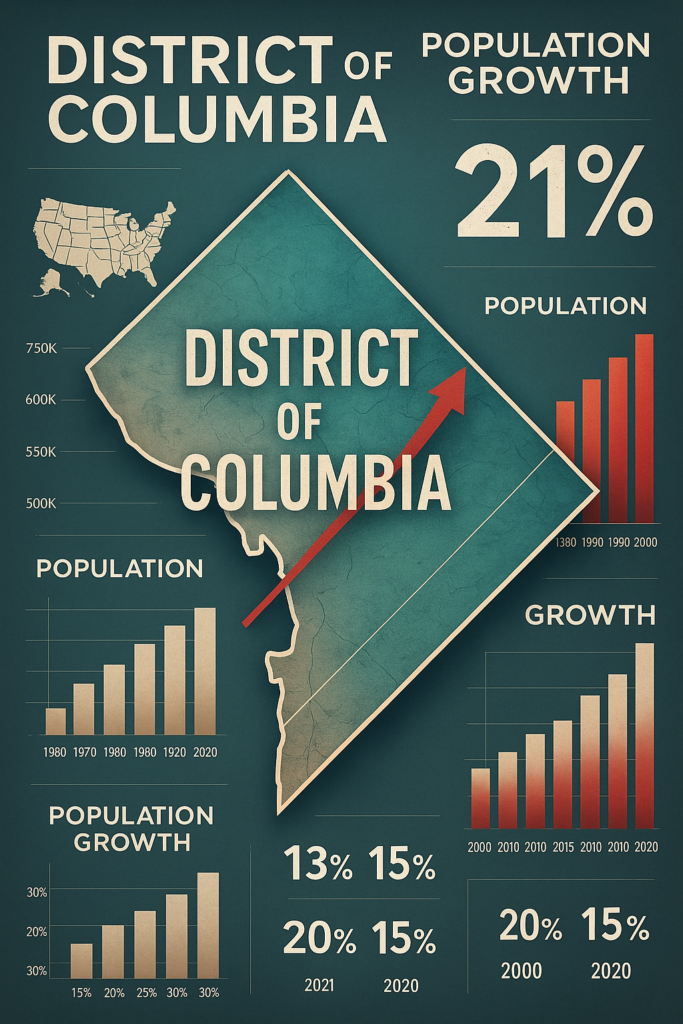
The District of Columbia has experienced steady population growth and urban revitalization, particularly in areas such as Navy Yard, NoMa, and Capitol Hill. As the city continues to attract high-income residents and professionals, commercial activity is expanding. This growth supports increased demand for NNN properties, especially in retail, office, and mixed-use sectors.
2. Stability and Demand for NNN Properties
D.C.’s economic base is anchored by the federal government, international organizations, and a growing tech and legal sector. This makes the city one of the most stable markets in the U.S. NNN properties leased to essential services—like pharmacies, banks, and government contractors—remain highly desirable and low-risk, especially during economic downturns.
3. Market Trends and Cap Rates
Cap rates for NNN properties in D.C. are typically lower than the national average, reflecting the market’s premium stability. However, investors can still find favorable returns, especially by targeting properties in transitional or up-and-coming neighborhoods. Current NNN cap rates in D.C. generally range from 4.5% to 5.5%, slightly rising due to interest rate volatility, which may create entry points for value-driven investors.
4. Financing Considerations for NNN Investors
D.C.’s high property values require larger capital commitments. Investors typically need a net worth of at least $1 million and annual income above $200,000, with 30%–40% down payments common for NNN deals. Institutional financing is readily available due to the market’s reliability, and investors leveraging 1031 exchanges can defer capital gains while reinvesting in D.C.’s strong commercial sectors.
5. Local Market Opportunities
The District offers NNN investment opportunities in high-footfall areas like Downtown, Dupont Circle, and H Street Corridor. Single-tenant retail buildings (e.g., national pharmacy chains, fast-casual restaurants), medical offices, and bank branches are especially attractive. For instance, a recently listed NNN-leased urgent care center in Northeast D.C. with a 10-year term and annual rent escalations has drawn interest from passive investors and 1031 exchange buyers.
Triple-Net (NNN) Investors Eye the District of Columbia for Long-Term Value and Urban Stability While traditionally seen as a high-barrier market, the District of Columbia is becoming an increasingly attractive destination for NNN investors, offering unique advantages including tenant stability, prime urban locations, and long-term growth potential. Here’s why D.C. stands out:
1. Lower Cap Rates but Exceptional Tenant Quality
Cap rates in D.C. generally range from 4.25% to 5.25%, lower than in states like Alabama or Texas. However, this is offset by high-credit tenants, minimal vacancy risk, and superior long-term asset appreciation. NNN brokers and institutional investors view D.C. as a “safe haven” for recession-resistant triple-net assets, especially those leased to federal agencies, banks, and national retailers.
2. High Property Values, But Stable and Resilient
D.C. has some of the highest commercial real estate values in the nation. While this may deter smaller investors, those who can afford to enter the market benefit from consistent appreciation, strong leasing demand, and minimal property turnover. NNN investors typically acquire urban infill properties leased to national chains, law firms, or government contractors—securing long-term, passive income.
3. Dense, Affluent Population Driving Urban Retail
With a population density over 11,000 people per square mile, D.C. supports vibrant retail corridors and walkable neighborhoods. The local economy is bolstered by high median incomes, a steady influx of professionals, and a young, educated workforce. This fuels demand for essential services, healthcare facilities, and quick-service restaurants, all ideal for NNN lease structures.
4. Focus on Urban Infill and Redevelopment
NNN investors are increasingly targeting redeveloped mixed-use zones in neighborhoods like Shaw, H Street NE, and Capitol Riverfront. These areas have seen a surge in new retail centers, grocery-anchored developments, and freestanding national-brand properties. Assets in these areas often come with long-term leases and rent escalations, further enhancing cash flow.
5. Strong Government and Institutional Anchors
Unlike many U.S. markets, D.C. benefits from the economic stability of the federal government, which accounts for a large share of local employment and tenant demand. Many NNN properties are leased to GSA-backed tenants, embassies, or federally funded organizations—making them among the most reliable cash-flowing assets in the country.
6. 1031 Exchange Benefits and Capital Security
D.C. is ideal for high-net-worth individuals using 1031 exchanges to defer capital gains. While local taxes can be higher than in tax-haven states, the security and performance of urban core assets often outweigh this concern. NNN brokers working with investors in D.C. frequently cite it as a capital preservation play—less focused on high yield and more on asset safety and long-term upside.
7. Growing Sectors: Healthcare, Education, and Finance
Emerging opportunities exist in D.C.’s healthcare and education corridors. Properties leased to urgent care clinics, universities, charter schools, and financial service providers are gaining traction among NNN investors. These are often mission-critical tenants with high renewal rates and limited relocation risk.
Income Taxes
District of Columbia’s Tax Landscape for NNN Investors: High Stability, But Tax Considerations Apply
While the District of Columbia (Washington, D.C.) offers unmatched tenant stability and asset appreciation, its tax environment is less favorable compared to low-tax states like Alabama. NNN investors and brokers should understand D.C.’s tax policies to strategically plan for long-term profitability and tax efficiency. Here’s what to consider:
1. Passive LLC Income is Subject to Local Taxes
Unlike Alabama, D.C. taxes passive income earned through LLCs. Rental income is subject to the Unincorporated Business Franchise Tax (UBFT) if the LLC is considered engaged in business in the District. The current UBFT rate is 8.25%, applied to net income. However, LLCs with fewer than 2 full-time employees or those structured solely for passive investment may be exempt from UBFT with proper planning and structure.
2. Corporate Franchise Tax Rate
For corporations investing in net lease properties in D.C., the corporate franchise tax rate is also 8.25%, among the higher rates in the U.S. This can reduce net returns unless the business qualifies for exemptions or operates with tight tax efficiency. However, the tradeoff comes with high-quality tenants and exceptional property appreciation, which can balance the higher tax burden over time.
3. Graduated Personal Income Tax Rates
D.C. applies a progressive personal income tax with higher rates for upper-income individuals, which affects NNN investors drawing income from pass-through entities such as LLCs or S Corps:
4% on income up to $10,000
6% on income between $10,001 and $40,000
6.5% between $40,001 and $60,000
8.5% between $60,001 and $250,000
10.75% on income over $1 million
These rates are higher than the national average, especially for high-net-worth individuals. Strategic use of 1031 exchanges or reinvestment can help mitigate taxable gains.
4. Estate and Inheritance Tax Considerations
Unlike Alabama, D.C. imposes an estate tax. As of 2025, estates over $4.71 million are taxed at rates ranging from 11.2% to 16%. There is no inheritance tax. Investors planning to pass down NNN assets in D.C. should consider trust structures or out-of-state estate planning to minimize these costs.
5. Moderate Property Tax Rates
D.C.’s commercial property tax rate is relatively moderate by urban standards:
$1.65 per $100 of assessed value for properties assessed at $5 million or less
$1.77 per $100 for properties valued over $10 million
While not as low as Alabama’s 0.4% average effective rate, it’s lower than many major cities like New York or Chicago. Moreover, D.C. property values appreciate steadily, supporting long-term investment upside.
6. Capital Gains Taxed as Ordinary Income
D.C. does not have a separate capital gains tax rate—capital gains are taxed as ordinary income under the personal income tax brackets listed above. For high earners, this could mean paying up to 10.75% on capital gains. Investors conducting 1031 exchanges can still defer federal capital gains, but D.C. does not fully conform to federal tax deferment rules, and consult with a local tax advisor is recommended for structuring.
Investing in triple net lease (NNN) properties in the District of Columbia (Washington, D.C.) presents unique opportunities, especially in areas experiencing population growth and economic development. NNN properties, where tenants are responsible for property taxes, insurance, and maintenance, offer investors a hands-off approach. Here are some key areas in D.C. to consider for NNN property investments:
1. Shaw and U Street Corridor:
Population Growth: These neighborhoods have seen a resurgence in residential development, attracting a younger demographic seeking urban living.
Economic Development: The area boasts a vibrant nightlife, dining scene, and cultural landmarks, contributing to its economic vitality.
Investment Potential: The blend of historic charm and modern amenities makes this corridor attractive for NNN investments, particularly in retail and mixed-use properties.
2. Navy Yard and Capitol Riverfront:
Population Growth: Significant residential developments have transformed this area into a bustling community.
Economic Development: Proximity to Nationals Park and the Anacostia Riverfront has spurred commercial growth, including restaurants and retail spaces.
Investment Potential: The area’s rapid development and popularity make it suitable for NNN investments in hospitality and retail sectors.
3. NoMa (North of Massachusetts Avenue):
Population Growth: NoMa has become one of D.C.’s fastest-growing neighborhoods, with a surge in residential and commercial projects.
Economic Development: The presence of major corporations and government agencies has bolstered the local economy.
Investment Potential: The area’s growth trajectory offers opportunities for NNN investments in office spaces and service-oriented retail.
4. H Street NE Corridor:
Population Growth: This corridor has experienced gentrification, attracting new residents and businesses.
Economic Development: Known for its arts and entertainment, the area has seen an influx of bars, restaurants, and boutiques.
Investment Potential: The dynamic atmosphere and ongoing development make it ideal for NNN investments in retail and entertainment venues.
5. Southwest Waterfront (The Wharf):
Population Growth: The Wharf development has introduced new residential units, drawing residents to the waterfront.
Economic Development: This area has become a hub for dining, entertainment, and hospitality, revitalizing the waterfront district.
Investment Potential: The mix of residential and commercial spaces offers diverse NNN investment opportunities, particularly in retail and hospitality sectors.
6. Brookland:
Population Growth: Home to several educational institutions, Brookland attracts students and faculty, contributing to its steady population.
Economic Development: The neighborhood has seen growth in local businesses, cafes, and art spaces.
Investment Potential: The area’s stable demographic and community-focused development make it suitable for NNN investments in essential services and retail.
Pros:
1️⃣ Strong Tenant Demand & Dense Urban Core
Washington, D.C. has an exceptionally dense population and a large daytime workforce driven by government agencies, universities, and tourism. This creates a consistent demand for commercial real estate, making it an ideal location for NNN lease properties that benefit from long-term, stable tenants.
2️⃣ Premium Rental Rates & Strong NOI
Due to limited real estate availability and strong market demand, rental rates in D.C. are among the highest in the nation. These premium rates contribute to strong net operating income (NOI), allowing investors to generate consistent cash flow from NNN leases.
3️⃣ Economic Stability Driven by the Federal Government
The presence of the U.S. federal government provides unmatched economic stability in Washington, D.C. Regardless of broader economic trends, the city maintains a consistent employment base and business activity, making it a lower-risk environment for property investment.
4️⃣ High Appreciation Potential
Real estate in Washington, D.C. has demonstrated strong historical appreciation. Limited space for new development and ongoing demand ensure that commercial property values remain on an upward trajectory, benefiting investors looking for long-term capital gains.
5️⃣ Walkable & Transit-Accessible Locations
Many parts of D.C., including Capitol Hill, NoMa, and Dupont Circle, are highly walkable and well-connected by Metro lines. Tenants prioritize accessibility and visibility, which enhances property value and makes NNN assets in these neighborhoods especially appealing.
6️⃣ Diversified Tenant Base
The tenant base in D.C. includes a mix of essential service providers like CVS and 7-Eleven, QSR chains like Starbucks and Chipotle, as well as law firms, nonprofits, and federal contractors. This diversity helps reduce investment risk and ensures consistent occupancy.
7️⃣ 1031 Exchange Opportunities
D.C. properties are frequently sought after for 1031 exchanges due to their stability and long-term income potential. Investors looking to defer capital gains taxes can reinvest in Washington, D.C. NNN properties to upgrade into a premium, cash-flowing asset.
Cons:
1️⃣ Lower Cap Rates
Washington, D.C. typically offers cap rates in the 4%–5% range, which are lower than what investors might find in more affordable states like Alabama or Texas. This makes it less appealing for yield-focused investors seeking higher short-term returns.
2️⃣ High Entry Costs
Commercial real estate in D.C. comes at a premium, often requiring significant capital for acquisition. Investors with limited budgets may find the cost of entry to be a barrier, particularly when competing against institutional buyers or REITs.
3️⃣ Property Taxes & Operating Costs
While not the highest in the U.S., D.C.’s property tax rate of around 0.85% is still higher than in many states such as Alabama. Urban maintenance, insurance premiums, and regulatory compliance can further increase the holding costs of NNN investments in the city.
4️⃣ Complex Regulatory Environment
Washington, D.C. has strict zoning laws, permitting requirements, and tenant protection regulations. These factors can complicate property management, slow down redevelopment efforts, and add legal costs for landlords and investors.
5️⃣ Limited New Supply & Intense Competition
Due to limited land availability and controlled development, new commercial property supply in D.C. is very restricted. As a result, the market is highly competitive, with intense interest from institutional investors and high-net-worth individuals.
6️⃣ Political Risk Exposure
As the nation’s capital, D.C. is occasionally impacted by political demonstrations, government shutdowns, or sudden shifts in policy. While rare, these disruptions can temporarily affect retail activity or tenant operations in certain neighborhoods.
D.C NNN Properties for 1031 Exchange
Invest in Free Standing Single Tenant Triple Net (NNN) Properties in District of columbia
Are you looking for a reliable 1031 exchange replacement property?
At Triple Net Investment Group, we specialize in the sale of single tenant NNN properties and triple net shopping centers across the United States. Our team is dedicated to helping investors find high-quality (Tenant Triple Net) NNN properties in District of columbia and nationwide that align with their financial goals and 1031 exchange requirements.
With our in-depth market knowledge and personalized service, we provide tailored investment strategies for both buyers and sellers of commercial real estate. Whether you’re looking to defer capital gains through a 1031 tax-deferred exchange or want to diversify your portfolio with income-generating assets, our team offers a wide selection of vetted NNN investment properties.
Corporate Tenant Credit Ratings
Find out more about the credit rating of the tenant before purchasing.
How safe are the triple net investment grade free standing single tenant properties?
Market Analysis
What three things should I know before investing?
Call or e-mail us and we will get back to you within 24 hours. We know of properties for sale that aren’t listed or advertised.
Email: [email protected] Tel: 202-361-3050
We strive hard to provide clients with quality costumer service
We provide our clients with all of the information they need upfront to make an informed decision, even before a Letter of Intent is issued such as: tenant credit information, store sales, lease terms, options, renewal rates, rent escalations, location analysis, site analysis, market analysis, demographic data, cash on cash returns on investment, internal rate of returns after taxes, risks, likes, dislikes and so on. We will then strategies how to proceed on making a best offer. It is our goal to build a solid relationship with our clients and keep them updated on net lease investments, even though they may not have a need for years to come.(NNN Properties in District of columbia)
We markets our listings locally, nationally and internationally
Triple Net Investment Group difference is a concept that is revolutionary in the commercial real estate brokerage business. In addition to marketing our deals to potential investors, We markets our listings to the entire brokerage community. We put our listings directly in front of thousands of commercial real estate agents in each state, region and local where the property is located.
