Why NNN Investors Prefer Florida State: Higher Growth & Competitive Cap Rates Explained
Future holding for NNN property investments in Florida
Triple Net Lease (NNN) properties—where tenants are responsible for property taxes, insurance, and maintenance—continue to be a compelling investment choice. In Florida, the outlook for NNN property investments is particularly strong, fueled by economic expansion, a favorable tax environment, and consistent population growth.
1. Economic and Population Growth
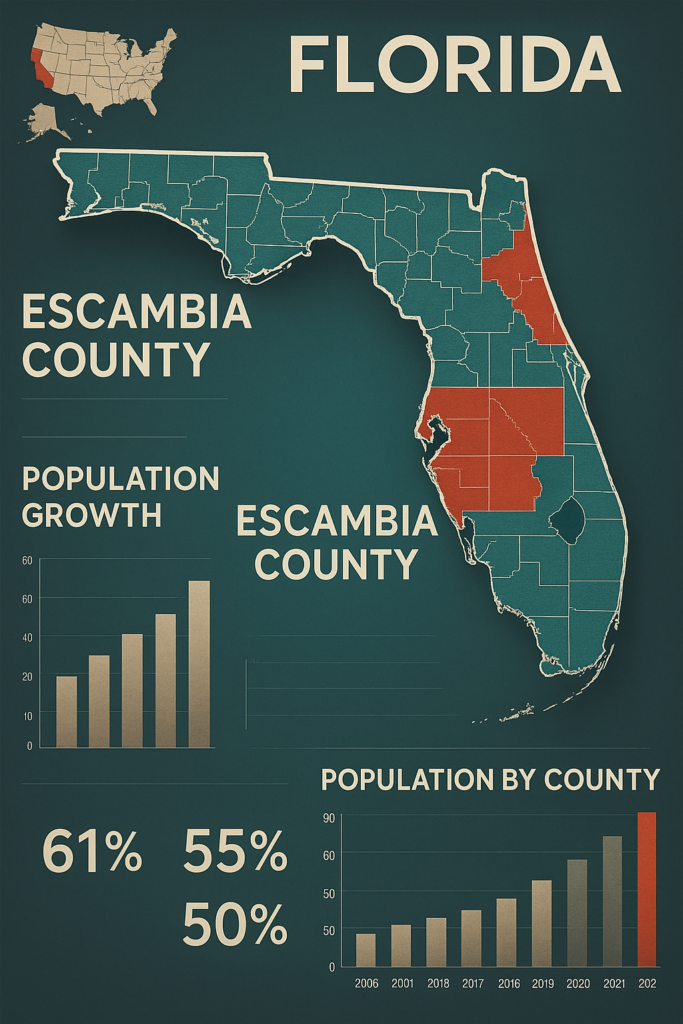
Florida is among the fastest-growing states in the U.S., with major metros like Orlando, Tampa, and Jacksonville seeing steady population increases. According to the U.S. Census Bureau, Florida added over 365,000 residents in 2023 alone, making it a prime market for commercial expansion. This demographic growth boosts demand for retail, industrial, and healthcare real estate—key sectors for NNN investors.
2. Stability and Demand for NNN Properties
Florida’s pro-business climate and zero state income tax attract national retailers and logistics companies, many of whom prefer long-term NNN lease agreements. Investors benefit from low-maintenance, stable cash flow, even during market volatility. National brands like Walgreens, Dollar General, and AutoZone frequently lease NNN properties throughout Florida, adding security and long-term tenant credibility.
3. Market Trends and Cap Rates
While cap rates nationwide have ticked upward due to higher interest rates, Florida remains competitive, offering cap rates ranging from 5.25% to 6.50% depending on location, asset type, and tenant strength. Cap rates in secondary markets like Lakeland, Ocala, and Port St. Lucie tend to be higher, offering better yield potential for investors willing to look beyond core metros.
4. Financing Considerations for NNN Investors
As in most states, entering Florida’s NNN market requires a strong financial foundation. Investors generally need:
A net worth of $1M+, or
An annual income of $200K+ (or $300K jointly),
And a 30%–40% down payment on acquisitions.
Financing options are widely available, especially for credit-rated tenants on long-term leases. 1031 exchanges are commonly used in Florida to defer capital gains and reinvest in NNN properties.
5. Local Market Opportunities
Florida offers a diverse range of NNN opportunities, from freestanding drugstores in suburban areas to industrial warehouses in logistics hubs like Lakeland and Jacksonville. Recent listings include:
A Publix-anchored NNN retail center in Fort Myers with a 7-year remaining term and annual escalations.
A FedEx distribution center in Tampa Bay on a 10-year NNN lease, ideal for institutional buyers.
Numerous Dollar General stores in rural counties like Suwannee and Glades with cap rates above 6.5%.
These opportunities make Florida a key state for NNN brokers, institutional investors, and 1031 buyers seeking income-producing assets in a no-state-tax jurisdiction.
Florida continues to attract Triple Net Lease (NNN) investors due to its dynamic economy, favorable tax environment, and strong population growth. With rising demand for commercial real estate across retail, healthcare, and logistics, Florida presents compelling opportunities for both institutional and private NNN investors. Here’s why NNN brokers and investors see Florida as a top-tier market:
1. Competitive Cap Rates in a High-Demand Market
While cap rates in Florida tend to be lower than in states like Alabama—averaging 5.0% to 6.0% for top-tier NNN assets—they remain attractive due to the state’s tenant quality, economic resilience, and growth potential. Premium locations such as Orlando, Miami, and Tampa see slightly compressed cap rates, but secondary markets offer better yields while maintaining tenant stability.
2. Property Appreciation and Market Liquidity
Florida’s real estate market benefits from strong appreciation and liquidity. NNN properties with national tenants—such as CVS, 7-Eleven, and Chick-fil-A—are highly sought after and typically command strong resale values, especially in growing metros and tourist hubs. This appreciation potential balances out the slightly lower cap rates compared to the Midwest or Southeast.
3. Rapid Population Growth & Economic Expansion
Florida consistently ranks among the top U.S. states for net migration and population growth, adding over 365,000 new residents in 2023. Cities like Tampa, Jacksonville, Fort Myers, and Orlando are booming, driven by expanding job markets, tech sector growth, and in-migration from high-tax states. This population surge creates ongoing demand for essential services, fueling NNN tenant expansion.
4. High Demand for Essential Retail, Medical, and QSR Tenants
Florida is a key expansion market for essential retail chains and quick-service restaurants (QSRs). Brands such as Publix, Walgreens, Dollar Tree, Starbucks, Taco Bell, and Chick-fil-A are actively opening new locations under NNN lease structures. The state is also seeing strong growth in medical net lease properties, with urgent care centers, dental offices, and veterinary clinics securing long-term NNN leases.
5. Favorable Tax Environment for Investors
Florida offers a highly favorable tax climate:
No state income tax, which benefits individuals and pass-through LLCs.
A corporate income tax rate of 5.5%, among the lowest in the U.S.
These features make Florida particularly attractive for 1031 exchange investors and those seeking to maximize after-tax returns on passive income from net lease properties.
6. Infrastructure & Industrial Growth
Florida’s position as a logistics and trade hub—with major ports in Miami, Jacksonville, and Tampa, and expanding distribution corridors along I-4 and I-95—drives demand for industrial NNN properties. National logistics firms, retailers, and last-mile delivery services are securing long-term leases on industrial and flex spaces, further broadening NNN investment opportunities beyond retail.
Income Taxes
Florida’s Tax Advantages for NNN Investors: A Prime Destination for Net Lease Properties
Florida stands out as a tax-friendly state for NNN (Triple Net Lease) investors, offering a combination of zero state income tax, competitive corporate rates, and favorable real estate tax policies. These advantages position Florida as a top-tier market for investors looking to optimize returns while minimizing their tax burdens. Here’s why Florida continues to attract savvy NNN brokers and investors:
1. No State Income Tax on Rental or Passive LLC Income
Florida does not impose a personal state income tax, which includes no tax on rental income or passive income earned through LLCs. This provides a significant advantage for investors seeking to maximize after-tax cash flow from their NNN properties. Compared to high-tax states like California or New York, this can result in tens of thousands in annual savings.
2. Competitive Corporate Income Tax Rate
Florida’s corporate income tax rate is 5.5%, one of the lowest among populous states. For investors using a corporate entity (C-corps or certain structured LLCs), this relatively low rate helps retain more earnings, allowing for reinvestment into property upgrades or additional NNN acquisitions.
3. No State Capital Gains Tax
Florida does not have a separate state capital gains tax. All capital gains are treated at the federal level only. This is particularly beneficial for NNN investors who plan to exit properties or utilize 1031 exchanges, as it lowers the effective tax cost on profits and facilitates reinvestment strategies.
4. No Estate or Inheritance Tax
Florida imposes no state-level estate or inheritance tax, offering estate planning advantages for long-term investors. This makes it easier to pass NNN properties to heirs without incurring additional state-level tax liabilities, preserving generational wealth.
5. Moderate Property Tax Rates
Florida’s average effective property tax rate is approximately 0.80%, which is higher than Alabama’s (~0.40%) but still moderate compared to national averages. The tax rate varies by county, with some areas offering exemptions or assessment caps (e.g., through homestead exemptions, though these typically apply to primary residences, not commercial investments).
6. No Intangible Tax on Investment Properties
Florida does not impose an annual intangible tax on real estate or passive investment holdings (unlike states like Tennessee, which have intangible property taxes). This absence further reduces ongoing holding costs for NNN properties, particularly when using LLCs or trusts.
Investing in triple net lease (NNN) properties in Florida can be a highly strategic move, especially in regions experiencing rapid population growth, infrastructure development, and strong commercial demand. With no state income tax and consistent in-migration, Florida offers compelling long-term opportunities for passive income through NNN assets. Based on recent data, here are the most promising counties and metro areas for NNN property investments:
1. Lee County (Fort Myers–Cape Coral):
Population Growth: Lee County added approximately 20,000 new residents in 2023, one of the fastest-growing counties in the U.S.
Economic Development: Growth driven by healthcare, tourism, and logistics; major infrastructure investments post-Hurricane Ian.
Investment Potential: Ideal for NNN properties like medical retail, pharmacies, and QSRs, serving a swelling retiree and working population.
2. Polk County (Lakeland–Winter Haven):
Population Growth: Among the top 10 fastest-growing counties nationally, with nearly 22,000 new residents added in 2023.
Economic Development: Central location between Tampa and Orlando makes it a distribution and logistics hub. Central location between Tampa and Orlando makes it a distribution and logistics hub.
Investment Potential: Great for NNN industrial, warehouse retail, and essential services like Dollar General and Walgreens.
3. St. Johns County (St. Augustine–Nocatee):
Population Growth: St. Johns saw a population gain of over 13,000 from 2023 to 2024.
Economic Development: High-income, master-planned communities with excellent school systems and strong housing demand.
Investment Potential: Affluent demographics support NNN investments in premium retail, medical, and QSR spaces.
4. Osceola County (Kissimmee–Poinciana):
Population Growth: Grew by approximately 13,000 residents in the past year, among the fastest in Central Florida.
Economic Development: Proximity to Orlando’s tourism and hospitality industries; expanding suburban development.
Investment Potential: The suburban expansion and economic diversity make it suitable for NNN investments in retail centers and professional office spaces.
5. Pasco County (Wesley Chapel–New Port Richey):
Population Growth: Saw growth of over 12,000 people between 2023 and 2024.
Economic Development: Rapid suburbanization north of Tampa, with significant retail, medical, and multifamily development.
Investment Potential: Strong demand for NNN healthcare and neighborhood retail developments.
6. Sarasota County (Sarasota–Venice):
Population Growth: Increased by more than 9,000 residents in 2023.
Economic Development: Popular with retirees and high-income remote workers; strong demand for healthcare services.
Investment Potential: Excellent for NNN medical offices, pharmacies, and essential retail properties.
7. Manatee County (Bradenton–Lakewood Ranch)
Population Growth: Gained around 8,500 new residents in 2023.
Economic Development: Home to Lakewood Ranch, one of the fastest-growing planned communities in the U.S.
Investment Potential: Booming suburban growth supports NNN investments in daycare, dental, and QSR sectors.
8. Duval County (Jacksonville)
Population Growth: Duval County added over 12,000 residents in 2023.
Economic Development: A major economic center for finance, logistics, healthcare, and military operations.
Investment Potential: Ideal for NNN assets like credit tenant retail, fast-casual chains, and urgent care facilities.
Pros:
1️⃣ No State Income Tax
Florida has no state income tax on personal or LLC rental income. Greatly benefits investors with passive income from NNN properties and supports 1031 exchange strategies.
2️⃣ Strong Population Growth
Florida added over 365,000 new residents in 2023, the largest numeric increase in the U.S. High migration supports demand for retail, healthcare, and essential services, which are prime tenants in NNN deals.
3️⃣ Business-Friendly Environment
Ranked among the top 5 states for business climate. Pro-growth legislation, economic development incentives, and low regulatory burden make Florida attractive for tenants and investors alike.
4️⃣ High-Performing Retail Markets
Cities like Tampa, Orlando, Jacksonville, and Miami continue to experience retail growth, supporting strong leasing activity. National brands like Dollar General, CVS, Walgreens, Starbucks, and QSR chains aggressively expand in Florida markets.
5️⃣ Tourism & Retiree-Driven Demand
Florida’s $100B+ tourism industry and large retiree population drive consistent demand for urgent care centers, pharmacies, restaurants, and grocers — ideal for NNN lease structures.
6️⃣ Real Estate Appreciation in Prime Markets
While cap rates are lower (~4.5%–5.5%), metro-area properties appreciate rapidly, especially in South Florida, Orlando, and Tampa. Ideal for long-term investors seeking both income and value growth.
7️⃣ Diverse Tenant Base
Florida’s economy includes finance, healthcare, logistics, tech, aerospace, and agriculture. This diversity supports a wide variety of credit tenants, enhancing risk mitigation for NNN investors.
Cons:
1️⃣ Lower Cap Rates Than Other States
Florida’s popularity drives demand and prices, resulting in lower cap rates (typically 4.5% to 6%) compared to states like Alabama or Ohio (6%–8%+). Investors seeking high cash flow may find better yield elsewhere.
2️⃣ Higher Entry Costs
Florida’s property prices, especially in coastal and metro areas, are higher than in the Southeast average. Acquisition costs and insurance premiums are elevated, particularly near high-demand urban and tourist zones.
3️⃣ Hurricane & Tornado Risks
Florida is highly susceptible to hurricanes and flooding, especially in coastal counties. This can increase insurance costs, underwriting challenges, and potential business interruptions for tenants.
4️⃣ Insurance Volatility
Florida’s commercial property insurance market is among the most expensive and unstable in the U.S. Property owners may face premium hikes and limited carrier options.
5️⃣ Intense Market Competition
Because of Florida’s strong fundamentals, NNN assets attract institutional buyers, REITs, and international investors. This competition can lead to bidding wars and limited inventory for mid-size private investors.
6️⃣ Zoning and Development Complexity
Some municipalities, especially in South Florida, have complex zoning codes, permitting delays, and regulatory layers. May affect timelines for NNN developments or property improvements.
Florida NNN Properties for 1031 Exchange
Invest in Free Standing Single Tenant Triple Net (NNN) Properties in Florida
Are you looking for a reliable 1031 exchange replacement property?
At Triple Net Investment Group, we specialize in the sale of single tenant NNN properties and triple net shopping centers across the United States. Our team is dedicated to helping investors find high-quality (Tenant Triple Net) NNN properties in Florida and nationwide that align with their financial goals and 1031 exchange requirements.
With our in-depth market knowledge and personalized service, we provide tailored investment strategies for both buyers and sellers of commercial real estate. Whether you’re looking to defer capital gains through a 1031 tax-deferred exchange or want to diversify your portfolio with income-generating assets, our team offers a wide selection of vetted NNN investment properties.
Corporate Tenant Credit Ratings
Find out more about the credit rating of the tenant before purchasing.
How safe are the triple net investment grade free standing single tenant properties?
Market Analysis
What three things should I know before investing?
Call or e-mail us and we will get back to you within 24 hours. We know of properties for sale that aren’t listed or advertised.
Email: [email protected] Tel: 202-361-3050
We strive hard to provide clients with quality costumer service
We provide our clients with all of the information they need upfront to make an informed decision, even before a Letter of Intent is issued such as: tenant credit information, store sales, lease terms, options, renewal rates, rent escalations, location analysis, site analysis, market analysis, demographic data, cash on cash returns on investment, internal rate of returns after taxes, risks, likes, dislikes and so on. We will then strategies how to proceed on making a best offer. It is our goal to build a solid relationship with our clients and keep them updated on net lease investments, even though they may not have a need for years to come.(NNN Properties in Florida)
We markets our listings locally, nationally and internationally
Triple Net Investment Group difference is a concept that is revolutionary in the commercial real estate brokerage business. In addition to marketing our deals to potential investors, We markets our listings to the entire brokerage community. We put our listings directly in front of thousands of commercial real estate agents in each state, region and local where the property is located.
