
Why NNN Investors Prefer West Virginia State: Higher Growth & Competitive Cap Rates Explained
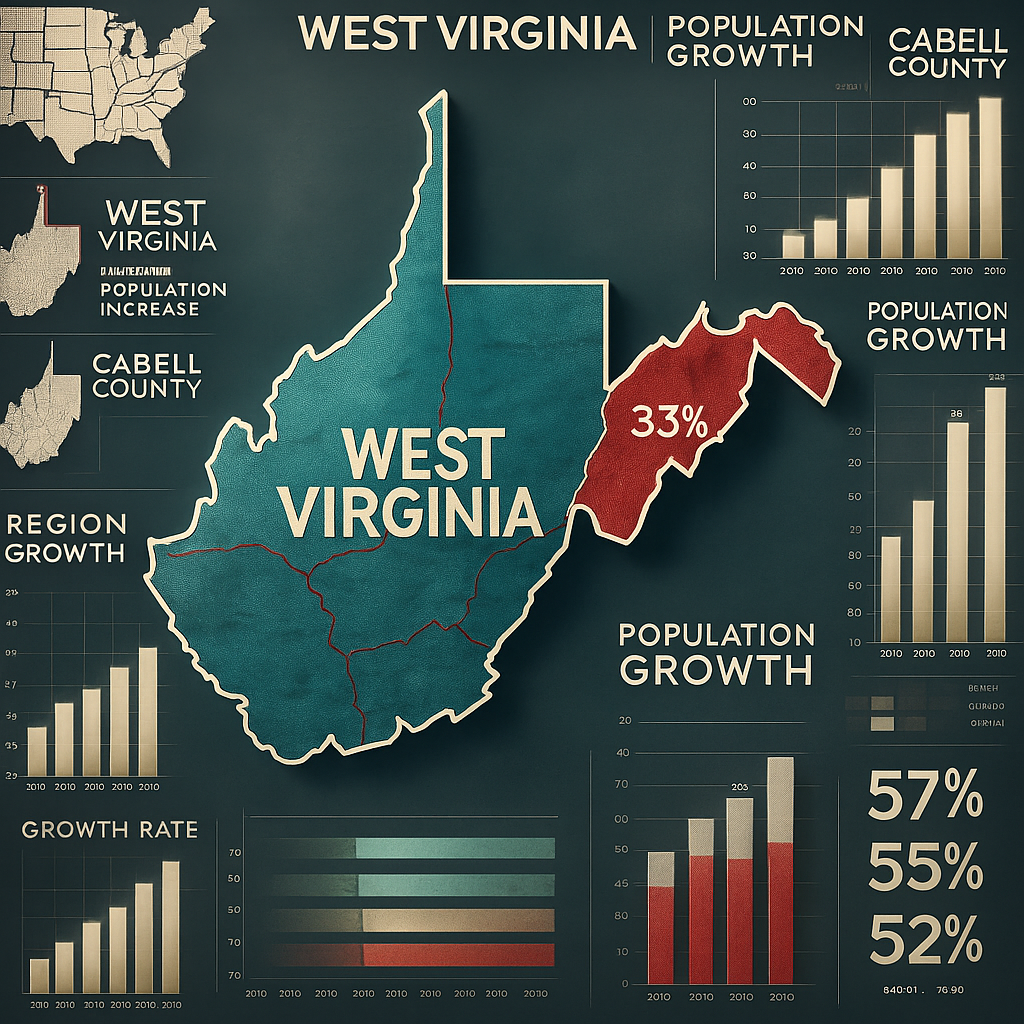
Future Holding for NNN Property Investments in West Virginia
Triple Net Lease (NNN) properties, where tenants cover property taxes, insurance, and maintenance costs, remain an appealing option for investors seeking predictable cash flow with minimal management responsibilities. In West Virginia, the outlook for NNN property investments continues to strengthen, supported by several key factors:
1. Economic and Population Trends
West Virginia’s economy has been diversifying beyond its traditional energy base, with growth in healthcare, logistics, and advanced manufacturing. Regions such as the Eastern Panhandle (Jefferson and Berkeley Counties) and Morgantown are experiencing steady population increases due to proximity to larger metro areas like Washington, D.C. and Pittsburgh. This expansion supports rising demand for retail, healthcare, and service-based NNN properties.
2. Stability and Demand for NNN Properties
NNN lease structures provide reliable, long-term income since tenants handle most operating costs. In West Virginia, the demand for essential-service tenants—such as pharmacies, grocery stores, and medical clinics—remains strong. These property types are especially appealing to NNN investors seeking recession-resilient assets in stable, smaller markets.
3. Market Trends and Cap Rates
Cap rates for NNN properties in secondary and tertiary markets like West Virginia tend to be higher than in major metros, often ranging between 6% and 7.5% depending on tenant quality and lease term. This offers attractive entry points for NNN investors looking for stronger yields compared to lower-yield states. With national cap rates rising, West Virginia continues to offer competitive returns for net lease property acquisitions.
4. Financing Considerations for NNN Investors
As with most net lease investments, financial strength is key. Investors generally need a net worth of at least $1 million or annual income above $200,000 to qualify for financing. Typical down payments fall between 30% and 40% of the property’s purchase price. West Virginia’s relatively lower property values compared to coastal states also make it an accessible market for first-time NNN investors or those seeking to diversify through 1031 exchanges.
5. Local Market Opportunities
West Virginia provides attractive opportunities in single-tenant retail and healthcare facilities, particularly in growing hubs like Morgantown, Huntington, and Martinsburg. Properties leased to national tenants such as dollar stores, urgent care centers, and fast-food chains are common NNN options. Investors using a 1031 exchange can strategically reinvest into West Virginia’s net lease market to defer capital gains taxes while securing long-term, stable returns.
Triple-net (NNN) investors are increasingly viewing West Virginia as an attractive location for net lease properties, thanks to its competitive cap rates, growing regional markets, and affordable entry points. Here’s why NNN brokers and investors see West Virginia as a promising market:
1. Competitive Cap Rates Compared to Other States
West Virginia offers higher cap rates than many primary markets, typically ranging between 6% and 7.5%. For investors seeking stronger returns than what is commonly found in coastal states where cap rates often dip below 5%, West Virginia provides an appealing balance of yield and tenant stability in essential-service sectors.
2. Affordable Property Prices
Commercial real estate in West Virginia is more affordable compared to larger neighboring states. This lower barrier to entry allows NNN investors to acquire properties leased to national tenants at accessible price points, creating opportunities for strong cash flow and portfolio diversification without the high acquisition costs of major metros.
3. Regional Population Growth & Economic Development
While West Virginia’s overall population growth is modest, specific regions are expanding rapidly. The Eastern Panhandle (Berkeley and Jefferson Counties) benefits from its proximity to Washington, D.C., while Morgantown continues to grow as a university and healthcare hub. These growth areas are driving demand for retail, healthcare, and service-oriented net lease properties.
4. Strong Demand for Essential Retail & QSRs
Essential-service tenants such as Dollar General, Family Dollar, CVS, Walgreens, McDonald’s, and Taco Bell are popular choices for NNN investors in West Virginia. With consumer demand focused on convenience and affordability, these tenants provide stable occupancy and long-term leases, aligning perfectly with NNN investors’ goals.
5. Favorable Tax Advantages for Investors
West Virginia does not tax out-of-state income for investors structured under certain LLCs, which can provide additional tax efficiencies. For those utilizing a 1031 exchange, West Virginia net lease properties represent an effective way to defer capital gains taxes while reinvesting into stable, income-producing assets.
6. Infrastructure & Industrial Growth
West Virginia has been expanding its logistics, energy, and manufacturing sectors, supported by investments in transportation corridors like I-64, I-77, and I-81. This industrial growth fuels local demand for retail, healthcare, and service-based tenants, creating opportunities for investors to secure net lease properties in emerging economic zones.
Income Taxes
West Virginia’s Tax Landscape for NNN Investors: Understanding the Benefits and Considerations
West Virginia offers a competitive tax environment for NNN investors, especially those seeking affordable entry points, stable tenants, and manageable tax obligations. While not as low-tax as some states, West Virginia provides a mix of advantages that make it an appealing destination for net lease property investments. Here’s what investors and NNN brokers should know:
1. Corporate Income Tax
West Virginia levies a flat corporate net income tax rate of 6.5%, which is competitive compared to many neighboring states. For investors using a corporate structure to hold NNN properties, this allows more retained earnings that can be reinvested into expanding portfolios or upgrading assets.
2. Personal Income Tax Rates
West Virginia has a progressive personal income tax system, with recent reforms lowering overall rates:
2.36% on taxable income up to $10,000
3.15% on income between $10,001 and $25,000
3.54% on income between $25,001 and $40,000
4.72% on income between $40,001 and $60,000
5.12% on income above $60,000
These rates are moderate compared to high-tax states, giving individual NNN investors more ability to retain income from net lease properties.
3. No Estate or Inheritance Tax
West Virginia does not impose an estate or inheritance tax, allowing investors to pass down NNN properties to heirs without additional state-level tax burdens. This feature makes the state attractive for long-term wealth transfer planning and multi-generational investment strategies.
4. Property Tax Rates
West Virginia has relatively low property taxes compared to the national average. The average effective property tax rate is about 0.55%, which keeps holding costs manageable for NNN investors. Lower property taxes improve long-term returns and reduce overhead when compared with higher-tax states.
5. Capital Gains Tax Treatment
West Virginia taxes capital gains as ordinary income under the state’s personal income tax system. With a top rate of 5.12%, the state’s treatment of capital gains is moderate and can be more favorable compared to states with significantly higher rates. This benefits investors considering a 1031 exchange or planning an exit strategy from their NNN properties.
6. Business-Friendly Reforms
West Virginia has implemented several tax reforms in recent years to encourage investment, including phased reductions in personal income tax rates and incentives for businesses relocating or expanding in the state. These reforms create a more attractive environment for NNN investors seeking growth markets with manageable tax exposure.
Investing in triple net lease (NNN) properties in West Virginia can be a strategic move, particularly in areas experiencing population stability, regional migration, and economic diversification. NNN properties shift property taxes, insurance, and maintenance to the tenant, offering investors predictable income with minimal management responsibilities. Based on recent trends, here are some of the top counties and cities in West Virginia to consider for NNN property investments:
1. Berkeley County (Martinsburg):
Population Growth: Between 2023 and 2024, Berkeley County added more than 2,000 residents, making it one of the fastest-growing counties in the state, largely due to migration from nearby Washington, D.C. and Northern Virginia.
Economic Development:
The area benefits from strong logistics, warehousing, and manufacturing sectors, supported by its access to I-81 and proximity to the Baltimore–Washington metro.
Investment Potential: Population inflows and a growing commuter base make Martinsburg a strong candidate for NNN retail, healthcare, and service-based investments.
2. Jefferson County (Charles Town & Ranson):
Population Growth: Jefferson County saw consistent annual growth, with steady net migration driven by affordability and proximity to the D.C. metro.
Economic Development: The county hosts industries tied to government contracting, tourism (Harpers Ferry), and service-based businesses.
Investment Potential: With its commuter-friendly location, Jefferson County is ideal for NNN properties such as national retailers, QSRs, and healthcare facilities serving a growing population.
3. Monongalia County (Morgantown):
Population Growth: Morgantown’s population remains stable, supported by the presence of West Virginia University and regional healthcare hubs.
Economic Development: Anchored by education, healthcare, and biotech, Morgantown is one of the state’s most diversified economies.
Investment Potential: NNN investors can target properties near the university and medical centers, including pharmacies, urgent care, student housing retail, and quick-service restaurants.
4. Kanawha County (Charleston):
Population Growth: Charleston’s population has stabilized after years of decline, bolstered by regional job growth in healthcare and government sectors.
Economic Development: As the state capital, Charleston benefits from government employment, healthcare, finance, and energy industries.
Investment Potential: Investors may find opportunities in essential retail and professional services catering to both residents and the government workforce.
5. Cabell County (Huntington):
Population Growth: While Huntington has faced modest population decline, stabilization efforts and healthcare-driven growth are offsetting losses.
Economic Development: Marshall University and a robust healthcare sector support Cabell’s economy, alongside logistics from its Ohio River location.
Investment Potential: NNN opportunities exist in healthcare facilities, retail centers, and service properties supported by university and hospital demand.
6. Wood County (Parkersburg):
Population Growth: Parkersburg has experienced modest stability with gradual migration shifts, maintaining a consistent economic base.
Economic Development: Manufacturing, energy, and healthcare remain pillars of the local economy, with logistics supported by its Ohio River access.
Investment Potential: Investors may find long-term stability in NNN industrial support facilities, retail centers, and essential service tenants.
Pros:
1️⃣ Higher Cap Rates in Secondary/Tertiary Markets
West Virginia often offers cap rates in the 6%–7.5% range, higher than primary markets like New York or California. This creates stronger cash flow opportunities for investors.
2️⃣ Affordable Property Prices
Commercial real estate in West Virginia is relatively inexpensive compared to neighboring states. Investors can acquire net lease properties with national tenants at lower price points, making the state accessible for both first-time and seasoned NNN investors.
3️⃣ Low Property Taxes
West Virginia maintains an average effective property tax rate of ~0.55%, below the U.S. average. This helps reduce holding costs for long-term investors.
4️⃣ Growing Regional Hubs
Counties like Berkeley, Jefferson, and Monongalia (Morgantown) are experiencing steady growth thanks to proximity to Washington, D.C., universities, and healthcare industries. These areas offer expanding tenant demand for retail, healthcare, and quick-service restaurants.
5️⃣ Stable Essential-Service Tenants
NNN properties in West Virginia often feature strong national tenants such as Dollar General, CVS, Walgreens, McDonald’s, and Taco Bell—businesses that perform well even during economic downturns.
6️⃣ No Estate or Inheritance Tax
The absence of a state-level estate or inheritance tax makes it easier for investors to transfer wealth and pass down NNN properties to heirs without additional financial burden.
7️⃣ Business Incentives & Economic Diversification
West Virginia is actively diversifying beyond coal and energy into healthcare, logistics, advanced manufacturing, and biotech, supported by state-level incentives. This improves long-term tenant stability and demand for commercial real estate.
Cons:
1️⃣ Slower Population Growth
Unlike high-growth states, West Virginia’s overall population is relatively flat, with growth concentrated in a few counties. Investors must focus on select regions (Eastern Panhandle, Morgantown, Charleston) for stronger tenant demand.
2️⃣ Location-Dependent Tenant Strength
While metro-adjacent areas are growing, some rural parts of West Virginia face economic stagnation and weaker tenant demand. Investors need to carefully assess market viability before purchasing.
3️⃣ Limited Urban Density
West Virginia lacks large, dense metro areas. This reduces opportunities for high-end retail or urban redevelopment projects compared to states with stronger urban growth.
4️⃣ Industry Dependence on Energy & Government
Although diversification is improving, parts of West Virginia still rely heavily on energy production, healthcare, and government services. Economic downturns in these sectors could affect tenant stability.
5️⃣ Infrastructure Challenges in Rural Areas
While major highways like I-64, I-77, and I-81 support commerce, some rural communities face infrastructure gaps. This can limit retail expansion and reduce long-term investment potential in less-developed areas.
West VirginiaNNN Properties for 1031 Exchange
Invest in Free Standing Single Tenant Triple Net (NNN) Properties in West Virginia
Are you looking for a reliable 1031 exchange replacement property?
At Triple Net Investment Group, we specialize in the sale of single tenant NNN properties and triple net shopping centers across the United States. Our team is dedicated to helping investors find high-quality (Tenant Triple Net) NNN properties in West Virginia and nationwide that align with their financial goals and 1031 exchange requirements.
With our in-depth market knowledge and personalized service, we provide tailored investment strategies for both buyers and sellers of commercial real estate. Whether you’re looking to defer capital gains through a 1031 tax-deferred exchange or want to diversify your portfolio with income-generating assets, our team offers a wide selection of vetted NNN investment properties.
Corporate Tenant Credit Ratings
Find out more about the credit rating of the tenant before purchasing.
How safe are the triple net investment grade free standing single tenant properties?
Market Analysis
What three things should I know before investing?
Call or e-mail us and we will get back to you within 24 hours. We know of properties for sale that aren’t listed or advertised.
Email: [email protected] Tel: 202-361-3050
We strive hard to provide clients with quality customer service
We provide our clients with all of the information they need upfront to make an informed decision, even before a Letter of Intent is issued such as: tenant credit information, store sales, lease terms, options, renewal rates, rent escalations, location analysis, site analysis, market analysis, demographic data, cash on cash returns on investment, internal rate of returns after taxes, risks, likes, dislikes and so on. We will then strategies how to proceed on making a best offer. It is our goal to build a solid relationship with our clients and keep them updated on net lease investments, even though they may not have a need for years to come.(NNN Properties in West Virginia)
We markets our listings locally, nationally and internationally
Triple Net Investment Group difference is a concept that is revolutionary in the commercial real estate brokerage business. In addition to marketing our deals to potential investors, We markets our listings to the entire brokerage community. We put our listings directly in front of thousands of commercial real estate agents in each state, region and local where the property is located.
